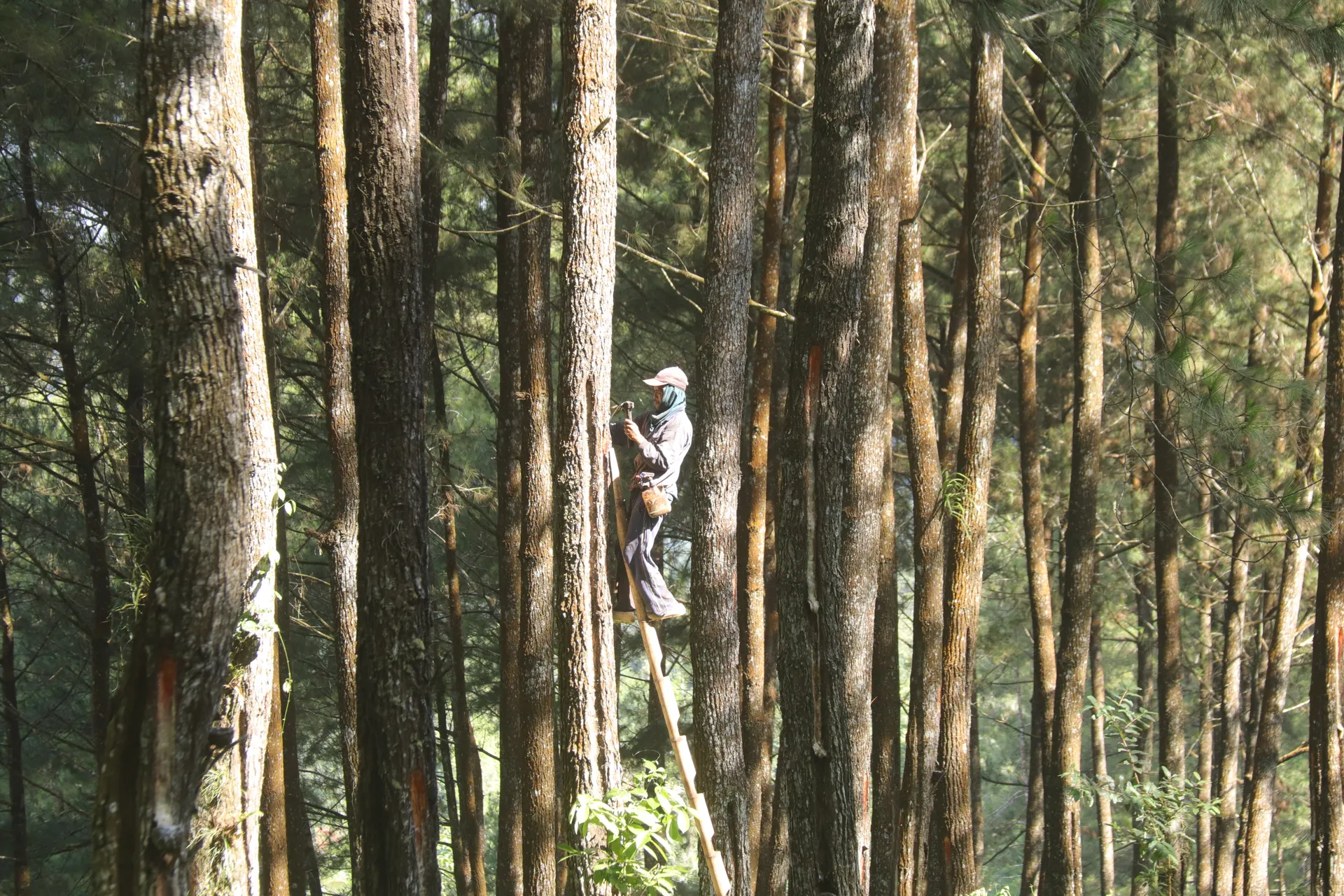
Fifteen years of coordinating tree removal, trimming, stump grinding, and plant-health work across Prosper, Frisco, Celina, Little Elm, and the wider DFW metro — that's the short version. The phone runs 24 hours a day, and every job is scoped in writing before a crew is booked, not because it sounds good on a page but because Blackland Prairie clay, oak wilt, and North Texas storm season genuinely don't wait for business hours to become a problem. What follows is the plain-language version of who's actually behind this, and why fifteen years of work on this specific ground actually counts for something.
What This Business Actually Is
This isn't a single crew running one truck and one chipper — it's a coordinator. Tree Service Prosper Woods Co handles the scheduling, the scoping, and the quality bar on every removal, trimming, stump grinding, and health-care project, then pairs each one with a tree crew or arborist sized correctly for that job — a two-person team for a routine trim, a full rigging and crane crew for a hazardous removal hanging over a roofline. That setup means jobs still get staffed during the worst stretches of spring storm season, instead of a homeowner or property manager sitting on a waitlist for one small outfit to free up. There's still exactly one contact, one clear assessment, and one number — (469) 481-1512 — for anything that comes up down the line.
Fifteen Years of Coordinating arborists in and Around Prosper
Fifteen years across Prosper, Frisco, Celina, and Little Elm means watching the same properties cycle through the same wet-dry clay swings, the same oak wilt exposure, and the same rough spring storm seasons, year after year. The crews and arborists coordinated for this work include arborists and, when a hazard call is needed, formal tree-risk assessors, all working to ANSI A300 pruning and ANSI Z133 safety standards. That track record counts most on the calls that are expensive to get wrong — a heritage oak that might actually be saved with proper oak wilt treatment instead of taken down, or a dramatic-looking lean that isn't structurally unsound at all. No invented certification number gets pasted here to look more official; call and get told exactly which arborist is scheduled and what their read on the tree actually was.
Why the Clay, the Oak Wilt, and the Storms Are More Than Marketing Copy
Prosper and the Collin and Denton County suburbs around it sit on the Blackland Prairie's expansive, high-plasticity clay, which swells after rain and shrinks hard through a long Texas summer — movement that tears at root systems underground and pushes drought-stressed oaks and elms toward decline. Add in the region's violent spring storms, which routinely snap weak-wooded Bradford pears and over-topped crape myrtles and drop limbs onto homes and vehicles, plus two disease threats closing in fast: oak wilt, confirmed in 76 Texas counties and lethal to the live oaks and red oaks that dominate local subdivision canopies, and emerald ash borer, already confirmed inside the Dallas metro and fatal to the green ash planted through recent decades of build-out. Prosper itself grew from roughly 2,000 residents in 2000 to more than 30,000 by 2020, with Frisco, Celina, and Little Elm expanding on similarly tight timelines, so most of the region's residential trees went into the ground together and are now maturing into the size — and the risk — where structural pruning, removal, and disease management all become necessary at once. Tree health care coordination exists specifically for that oak wilt and EAB pressure, and emergency tree service coordination covers whatever storm season leaves behind.
Being Upfront About the Coordinator Model
Coordinating rather than employing a single fixed crew is worth stating outright rather than letting a vaguer page imply something different. A call gets scoped, walked through what an arborist actually found, and matched to a crew equipped for the specific job — a hazardous tree removal, routine tree trimming, or a stump left over from earlier work. That's a different setup than a single small outfit trying to be everything to everyone across Prosper, Frisco, Celina, and Little Elm at once, and it's a big part of why jobs tend to move faster during peak storm season than they would with one crew and one truck trying to cover the whole area. Comparing against another Prosper tree company? Ask them the exact question this page just answered — who's actually doing the climbing, and what stands behind it. The reviews page shows the honest, still-filling-in version of how that's gone so far — real jobs only, nothing invented.
Got a tree that needs a look? The same Prosper tree service that's answered calls for fifteen years is one call away — (469) 481-1512, any hour, any day. See how to reach us for what to have ready and how the free on-site assessment actually works.
Frequently Asked Questions
How long has this business actually been arranging tree work in Prosper?
Fifteen years now, covering removal, trimming, stump grinding, and plant-health work across Prosper, Frisco, Celina, Little Elm and the broader DFW metro. The soil hasn't gotten any easier in that time — Prosper still sits on Blackland Prairie clay that swells and cracks with every wet-dry cycle, and oak wilt pressure on the region's oaks hasn't gone anywhere either — but understanding exactly how one particular street's trees respond to a North Texas summer takes years of coordinating real jobs there, not a checklist imported from somewhere else. The phone is answered 24 hours a day, and every job is scoped in writing before a crew is booked. Fifteen years in this one metro tends to mean the hazard pattern in your yard has already shown up somewhere nearby before.
What does a free tree assessment actually cover?
An arborist walks the tree in person — species, canopy condition, lean, root flare, and what the soil is doing under it — and hands over a written scope rather than a number shouted over the phone. That matters most on the expensive-to-redo jobs: a large removal three feet from a fence, a crane job working over a garage roof. Call (469) 481-1512 and get told exactly which crew is booked and what the scope covers before a single truck rolls out. Confirming coverage ahead of time is baked into how every job across Prosper, Frisco, Celina and Little Elm gets handled.
What's actually meant by 'coordinator' — is there an in-house crew, or not?
No in-house crew, and that's stated plainly rather than dressed up. Tree Service Prosper Woods Co runs the scheduling, the scope, and the quality bar on every project, then matches it to a tree crew or arborist suited to that specific job — a small two-person team for a routine trim, a rigging and crane crew for a hazardous removal hanging over a roofline. That structure means a broader bench to pull from than any single small crew could staff alone, which counts most during a busy stretch of Texas storm season when the whole metro is calling at once. Either way, there's one contact, one clear assessment, and one number — (469) 481-1512 — for anything that comes up afterward.
Why does the clay under Prosper actually matter to a tree's health?
Prosper and the Collin and Denton County suburbs around it sit on the Blackland Prairie's expansive, high-plasticity clay — soil that puffs up after rain and then shrinks hard through a long Texas summer. That constant movement tears at root systems underground and pushes stressed trees, live oaks and red oaks and cedar elms especially, toward drought decline and secondary problems like hypoxylon canker, a fungus that moves into hardwoods already weakened by heat and moisture swings. A crew that doesn't catch that stress pattern early can miss a hazard building underground long before a limb visibly fails above it. Watching specific Prosper properties move through that cycle for fifteen years is exactly the kind of local read that goes into matching a job with the right arborist.
Is oak wilt a genuine risk here, or overstated?
Genuine — the disease is confirmed in 76 Texas counties and kills live oaks and red oaks at epidemic rates across Central and West Texas, and Prosper's young, tightly planted canopy of exactly those species is directly in the path. It spreads two ways: above ground, when beetles carry spores to a fresh cut, and below ground, through interlocking root systems between neighboring oaks — a description that fits most subdivisions around Prosper and Frisco fairly closely. That's the reason the arborists coordinated for this work follow Texas A&M Forest Service's guidance against cutting or wounding oaks between February and June, when the fungus and its beetle carrier are most active. A suspected case deserves an arborist's actual look, not a guess based on a couple of yellowing leaves.
Should someone with ash trees in Prosper actually be concerned about emerald ash borer?
Yes — confirmed already inside the Dallas metro, which puts the ash trees planted across Prosper, Frisco, and Little Elm over roughly the last two decades of subdivision growth squarely in harm's way rather than watching from a safe distance. The larvae feed under the bark and girdle the tree from the inside, so visible dieback tends to show up only once real internal damage has already happened. An assessment can determine whether a particular ash is still worth treating or has already crossed that line, and either finding is more useful than waiting to see what happens. Given how close the confirmed infestation already sits, an early look costs far less than it might seem to.
What credentials do the people actually working on a job hold?
arborist status runs through the roster, and depending on what a job calls for, formal tree-risk assessors handle formal hazard evaluations. Everyone works to ANSI A300 pruning standards and ANSI Z133 safety standards — the industry's actual benchmarks for cut placement and safe rigging around a property. Worth stating plainly: these are credentials the coordinated crews and arborists themselves hold and maintain through continuing education, not something claimed on behalf of the business as a whole. That distinction is exactly why a TRAQ-level hazard call gets matched to someone qualified for it instead of whoever's available that day.
Does this cover businesses too, or only homes?
Both — residential jobs across Prosper, Frisco, Celina and Little Elm run alongside commercial and property-management work, and the underlying causes are identical either way: Blackland Prairie clay, oak wilt exposure, violent spring storms. A homeowner's single leaning pecan and a commercial lot's whole row of storm-damaged crape myrtles are just different scales of the same problem, so equipment scales accordingly — a bucket truck for a backyard, a crane for a large commercial clearing job. Property managers get the identical written assessment and single point of contact a homeowner gets. The process starts the same way regardless — a call, then a look at the property.
How far out from Prosper does this actually reach?
The base is 1170 N Preston Rd in Prosper, and coverage runs out through Frisco, Celina, Little Elm, and the wider DFW metro from there. That whole area shares the same expansive clay belt and the same oak wilt and emerald ash borer exposure, so a hazard pattern turning up in one town has a habit of showing up in the next one over not long after. Just outside that immediate footprint but still somewhere in North Texas? Call and it'll get confirmed whether it fits a crew's schedule. A tree's size, species, and how urgent it is matter more than raw miles from Prosper when it comes to matching the right arborist to a job.
Why go with a local coordinator instead of a big national tree-service brand?
A national chain hands your job to whoever's subcontractor happens to be free that week, usually with zero specific knowledge of how Collin or Denton County clay behaves, what oak wilt exposure looks like locally, or how quickly a North Texas spring storm can turn a healthy limb into a real hazard. That local read on how the Blackland Prairie moves under Prosper and Frisco properties gets built into how a job is scoped before an arborist ever shows up on-site. Less time spent re-diagnosing something a generic dispatcher missed, more time spent getting the actual call right — treat it, prune it, or take it down — on the first visit. Fifteen years coordinating jobs on this exact ground is the difference between a company that's local on paper and one that's actually local in practice.
What hours can someone actually reach you?
Around the clock, every day — a call about a tree leaning after a storm, a limb down across a fence, or just a question about routine trimming gets an answer whenever it comes in, not a voicemail that waits for Monday. Call (469) 481-1512 and talk through the situation, a realistic timeline, and which arborist or crew fits it. There's no hour that's a bad time to call about an active hazard — a split leader over a driveway doesn't improve by waiting for business hours. Whoever's on the line at 2 a.m. is the same person answering at 2 p.m.
Is there a real limit on how much of a tree can get cut back in one visit?
Yes — ANSI A300 pruning standards cap live-canopy removal at roughly a quarter in any single year, since taking more than that in one pass stresses the tree and tends to trigger decline instead of a healthier shape. That's exactly why the coordinated arborists won't agree to 'crape murder'-style topping or one aggressive cutback just because it looks neater right away — proper structural pruning moves toward the right shape gradually, with cuts landing just outside the branch collar so the tree can seal the wound correctly. A tree that's been neglected for years might genuinely need staged pruning across more than one visit rather than a single dramatic cut. If a company offers to take well over a quarter of the canopy in one pass, that's worth pushing back on before they start.